
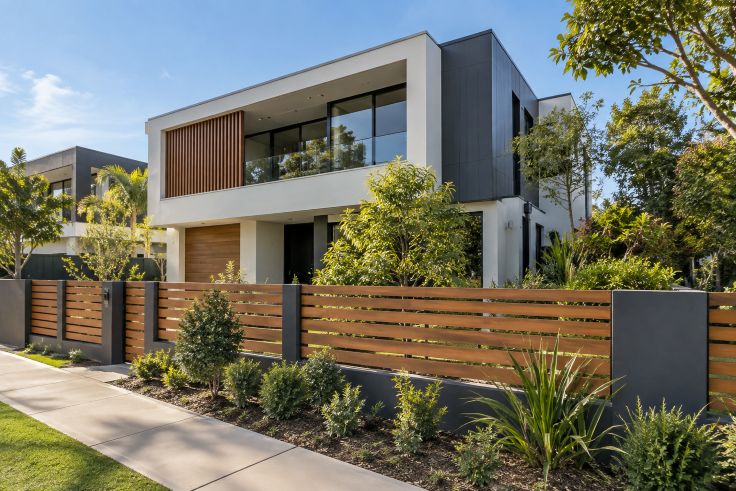
Fencing can influence privacy, security, airflow, street appeal, and the way a home connects with its outdoor spaces. It also needs to work within planning requirements. NSW Planning notes that some fences may qualify as exempt development when they meet the standards set under the NSW planning framework.
The challenge is finding a boundary treatment that performs these practical jobs without looking disconnected from the house. For owners of Sydney properties, that often means considering the architecture, surrounding landscape, privacy needs, and local conditions together. A fence that suits a coastal home may feel out of place beside a traditional facade, while a solid privacy fence may be unnecessary where openness is more important.
The solution is to treat fencing as part of the overall exterior design rather than as a separate feature. These seven ideas show how different approaches can work with a range of residential styles.
1. Choose Clean Horizontal Lines for Contemporary Homes
Modern homes often use simple forms, broad surfaces, and restrained colour palettes. Horizontal fencing can continue those lines into the front garden and create a visual connection between the building and its boundary.
Timber, aluminium, and composite-style finishes can all suit this approach. The key is restraint. Keep decorative details limited and consider repeating colours already found in window frames, roofing, garage doors, or exterior cladding.
Spacing also matters. A fully solid design provides greater screening, while gaps between boards create a lighter appearance and allow more air to move through the boundary.
2. Keep Coastal Fencing Light and Open
Homes near the coast often benefit from designs that feel open rather than visually heavy. Slim vertical battens, simple aluminium fencing, and pale finishes can complement coastal architecture without competing with landscaping or views.
Airflow is worth considering as well. YourHome, the Australian Government’s sustainable housing resource, explains that fences and landscaping can be positioned to direct beneficial breezes toward a home. This makes boundary design part of the broader response to local conditions rather than a purely decorative choice.
3. Give Traditional Homes a Simpler Update
A modern fence does not have to make an older property look contemporary. Traditional homes can work well with vertical pickets, restrained masonry elements, or metal fencing with straightforward proportions.
Instead of adding elaborate ornament, take cues from the house itself. Look at the spacing of veranda posts, window proportions, roof details, and existing materials. Repeating one or two of these visual elements can make a new fence feel more settled.
Colour can provide the modern update. A simple neutral finish can make a familiar fence profile look cleaner while preserving the character of the property.
4. Use Minimalist Fencing to Reduce Visual Clutter
Minimalist architecture works best when every exterior element has a clear purpose. A complicated boundary can weaken that effect.
Consider narrow battens, simple panels, concealed fixings, and gates that visually continue the fence line. Matching the fence with other exterior elements can also reduce the number of competing colours and materials.
Minimal does not mean ignoring practical requirements. Before settling on height and construction, check the site’s planning conditions. NSW Planning provides specific standards for fences that qualify as exempt development, including requirements that vary by location, zoning, materials, and site conditions.
5. Build Privacy Into the Design
Privacy is often a priority where outdoor entertaining areas, bedrooms, or living spaces sit close to neighbouring properties. Solid or closely spaced fencing can create useful screening, but taller and heavier designs should still relate to the scale of the house.
One option is to combine a solid lower section with a lighter upper section. Another is to use vertical battens with carefully chosen spacing. Both approaches can soften the visual weight of a large boundary.
Think about ventilation before creating a completely solid enclosure. YourHome highlights air movement as an important part of passive cooling and recommends considering fences and planting when planning breeze paths around a dwelling.
6. Make Pool Fencing Feel Connected to the Garden
Pool fencing has a strong practical role, but it does not need to feel separate from the surrounding landscape. A restrained design can help the pool, paving, planting, and house read as one outdoor space.
Transparent sections can preserve sightlines where appropriate, while slim metal fencing can provide a more defined edge. Material selection should respond to the architecture and outdoor finishes already present.
Safety requirements should come before appearance. Design choices around a pool need to satisfy the applicable NSW requirements, so decorative decisions should be made only after the required barrier configuration has been established.
7. Let Landscaping Share the Work
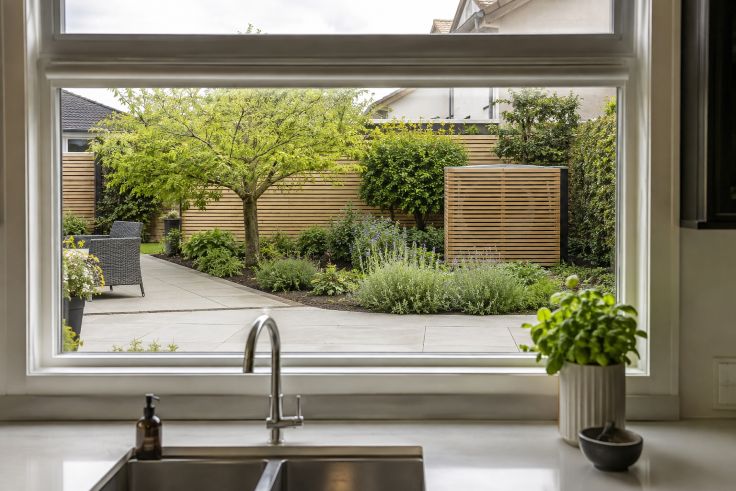
A fence does not have to provide all the visual screening on its own. Combining a simple boundary with trees, shrubs, grasses, or climbing plants can create a softer transition between the home and the street. This approach also helps connect the boundary with outdoor living spaces, where fencing, planting, paving, and seating areas can be planned as parts of the same overall design.
This approach can be especially effective when a tall solid fence would make a small front garden feel enclosed. YourHome notes that gardens and green plants can help cool the areas around homes through shade and evapotranspiration. It also recommends coordinating fences and planting so useful breezes are directed rather than unnecessarily blocked.
A Fence Should Belong to the Whole Property
Good fence design starts with more than choosing a material. The home’s architecture, street setting, privacy needs, landscaping, airflow, and planning rules all influence what will work.
Contemporary homes may suit crisp horizontal lines, while coastal settings often benefit from lighter boundaries. Traditional houses can retain familiar proportions, minimalist homes can reduce visual clutter, and landscaped properties can use planting to soften the boundary.
Taking these factors into account early makes it easier to create a fence that feels intentional. As residential design continues to place greater emphasis on connected indoor and outdoor spaces, boundaries can become a considered part of the overall property rather than an element added at the end.



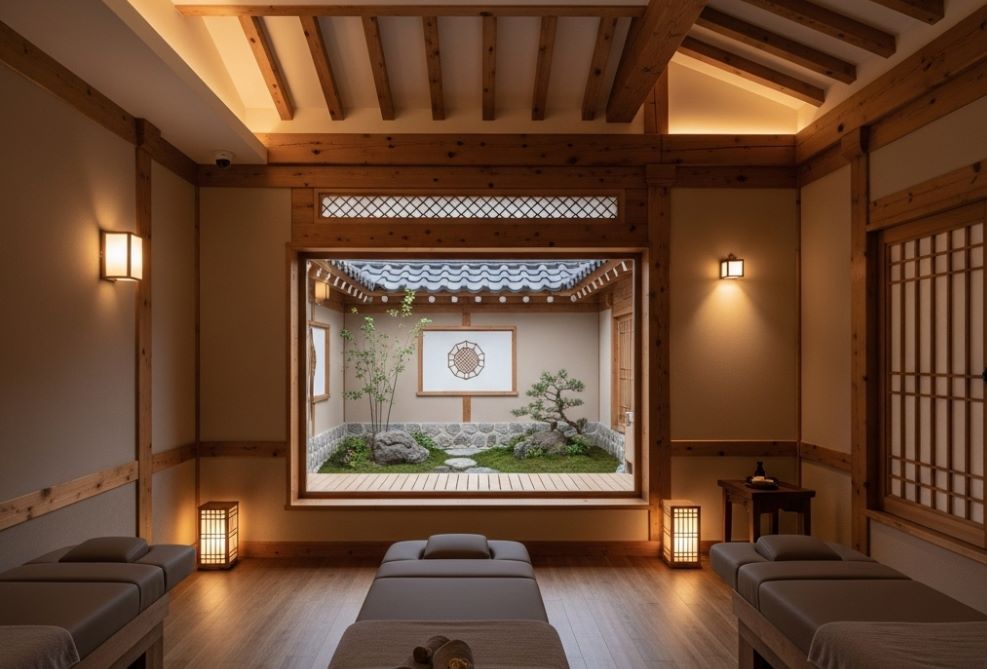
 Bellevue homes radiate charm, and inspired interior design unlocks their full potential. Thoughtful design transforms kitchens, bathrooms, and living spaces into areas that balance beauty with everyday functionality. Whether it’s a rustic retreat, a sleek modern haven, or a cozy farmhouse vibe, interior design shapes spaces that reflect the homeowner’s unique personality. In Bellevue, where diverse architectural styles meet vibrant lifestyles, custom renovations elevate homes into personal sanctuaries.


