
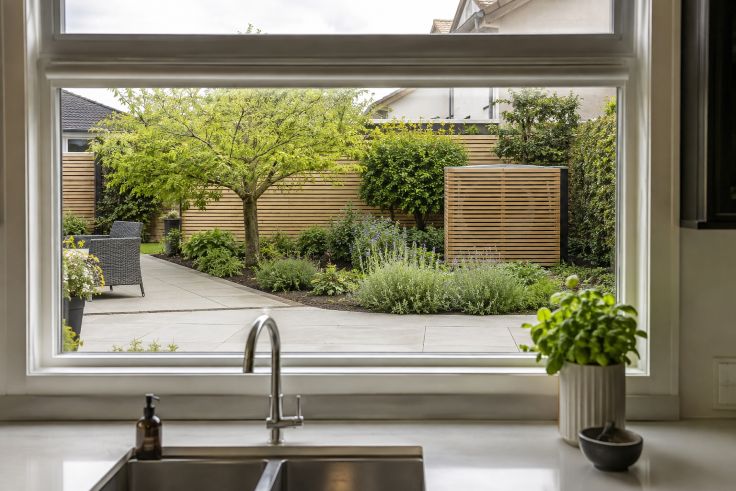
Views of natural surroundings through windows have been associated with positive health and wellbeing outcomes. A 2025 meta-analysis indexed by PubMed reviewed 28 studies and found consistently positive associations between viewing nature through windows and measures of psychological, physiological and physical health. For homeowners, this suggests that improving what can be seen outside may change the experience of a room without requiring major interior work.
The most effective improvements often begin directly outside the glass. Tidying planting, relocating storage or reducing the visual impact of equipment can make an existing window feel more thoughtfully positioned. Where a heat pump sits within a prominent sightline, for example, a Vaillant cover may be considered as a way to make the unit less visually dominant, provided any enclosure is appropriate for the equipment and does not interfere with its required operation or airflow.
1. Start by Organizing What the Window Actually Frames
Before buying plants or adding decorative features, stand at the places where the window is normally viewed. This might be a sofa, dining chair, kitchen counter or desk. Identify what attracts attention first and which objects interrupt an otherwise pleasant scene.
Simple organization can make a noticeable difference. Move unused pots, bins, hoses and gardening equipment away from important sightlines. Group items that need to remain outside rather than scattering them across the garden. The goal is not to create a perfectly empty landscape, but to give the eye a clearer route through the view.
Research published through the National Library of Medicine has examined specific characteristics of window scenes and found that perceived amounts of nature, visible sky and other visual features can contribute to how people assess view quality. This makes the composition beyond the glass worth considering rather than treating the garden as separate from the interior.
2. Build the View Around Planting
Once clutter has been reduced, look for areas where planting could provide a stronger focal point. Start with what is already growing successfully. A mature shrub, attractive tree or established border may simply need pruning or better organization around it.
The Royal Horticultural Society recommends choosing plants that suit their location and growing conditions. Its sustainable planting guidance also encourages combinations that support biodiversity while reducing unnecessary demands for water and other resources.
Think in layers when viewing planting from indoors. Low plants can fill bare ground, medium-height shrubs can create depth, and taller vegetation can provide a background. Seasonal changes matter too. Mixing suitable evergreen and deciduous plants can prevent the scene from becoming completely bare during colder months while allowing the view to change naturally throughout the year.
3. Give Outdoor Storage a Less Prominent Position
Storage is practical, but its location can unintentionally dominate a window. Wheelie bins, recycling containers, gardening tools and children’s outdoor equipment are often placed where they are easiest to reach rather than where they are least noticeable.
Walk outside and examine alternative positions before investing in new storage. Moving a container a few metres to the side of a building or behind existing planting may be enough. Where relocation is impractical, a suitable storage enclosure or screen can help organize several objects into one visually contained area.
Accessibility should remain part of the decision. Frequently used items still need to be easy to reach, so the aim is to balance appearance with everyday practicality.
4. Use Outdoor Lighting Selectively
A window does not stop contributing to a room after sunset. Carefully positioned exterior lighting can reveal a pathway, textured planting or another useful feature, giving the window some visual interest during darker hours.
More lighting is not necessarily better. The Royal Horticultural Society advises keeping garden lighting low, directing it toward areas where illumination is needed and avoiding unnecessary upward light. Its guidance also notes that excessive artificial lighting can disrupt nocturnal wildlife, including insects and bats.
For a window-facing garden, this means concentrating light on a limited number of features rather than flooding the entire space. Warm, low-intensity lighting around paths or selected plants can provide useful illumination while reducing glare through the glass.
5. Reconsider Where Outdoor Equipment Sits
Modern homes may have heat pumps, air-conditioning equipment, water systems and other mechanical installations positioned near exterior walls. These objects serve practical purposes, yet their placement can become particularly noticeable when they sit directly outside frequently used windows.
If equipment has not yet been installed, discuss sightlines alongside technical requirements when choosing its location. Existing equipment is more complicated because moving it may involve professional work and technical restrictions. Screening can sometimes provide an alternative, particularly when the goal is blending functional features with the surrounding design, but any solution should still preserve access, ventilation and manufacturer requirements.
This is an area where appearance should follow function. Any proposed screen or enclosure should be assessed with the equipment’s installation guidance in mind rather than being chosen solely because it looks attractive from indoors.
6. Add Screening Without Blocking Everything
Screening works best when it hides a specific distraction rather than closing off the entire outlook. A narrow section of slatted screening, carefully positioned planting or another suitable outdoor barrier may conceal bins, neighbouring service areas or equipment while preserving trees, sky and open garden space.
Evidence published by PubMed in 2024 found that study participants who could see at least three trees through their windows reported higher nature connectedness and mental wellbeing than those without that visibility, although the researchers described the mediating effect as limited. The finding supports a broader principle: where greenery already exists, improvements should ideally preserve useful natural views rather than replace them with solid barriers.
Test screening positions before making them permanent. A temporary panel, garden cane or even another person standing at the proposed height can help determine how much coverage is actually necessary when viewed from inside.
A Better Window View Can Start Outside
Improving a window view does not always require moving furniture, replacing glazing or redesigning an entire room. Often, the more practical approach is to examine what the window frames and make small changes beyond it.
Organized gardens, layered planting, discreet storage, restrained lighting, thoughtful equipment placement and selective screening can all contribute to a calmer and more intentional outlook. The best solution will depend on the property, but the principle remains simple: preserve the elements worth seeing, reduce unnecessary visual distractions and allow practical outdoor features to coexist with the view.

